
Daily Supplement Habits
Vitamin D and Magnesium: A Week of Stacking Observations
Marcus Fraser··9 min read
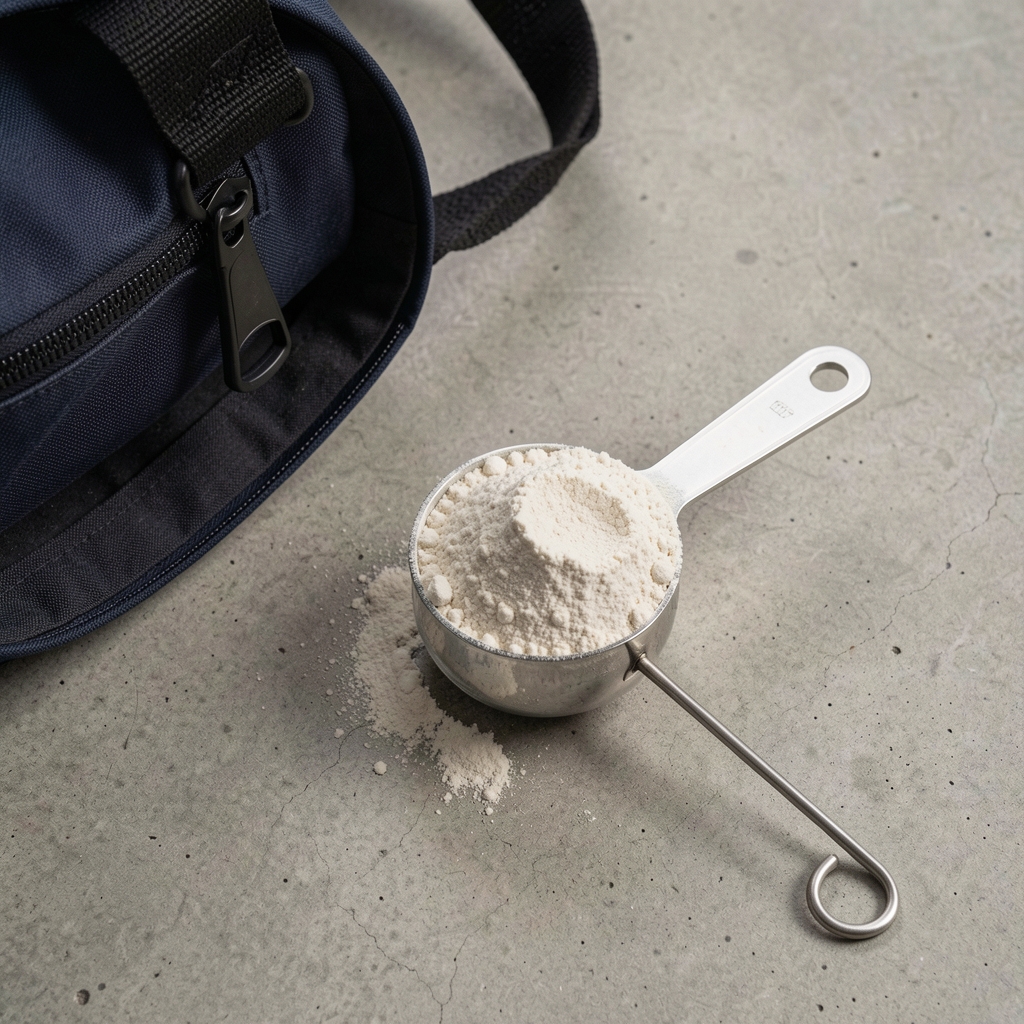
Of all the subjects in men's supplement review, creatine occupies an unusual position: it is perhaps the most extensively documented nutritional supplement in published research, and yet it remains surrounded by persistent misreadings. The editorial task, in covering it, is less one of discovery and more one of clarification.
This survey draws on the published nutritional literature to examine what creatine's observed contribution to physical output actually shows — and what it does not. The aim is not to advocate for creatine as part of a men's daily supplement stack, nor to dismiss it, but to present the published record as an editorial resource for active men making considered decisions about their supplement stacking habits.
Creatine supports physical output over time in resistance training routines. That sentence is as precise as the published record allows at the level of editorial summary. The details behind it are worth understanding.
Creatine is a compound found in small quantities in animal-source foods — primarily red meat and fish — and produced endogenously by the body. In the context of supplementation, it is typically encountered as creatine monohydrate, a form that has been the subject of the majority of published nutritional research on the compound.
For the purposes of this editorial survey, the distinction between creatine as a naturally occurring compound and creatine as a supplement is important. The editorial does not address any compound other than creatine monohydrate as used in the published research cited. Readers considering creatine as part of a daily supplement stack should note this distinction when comparing product claims with published findings.
The mechanism by which creatine supports physical output relates to its role in the resynthesis of adenosine triphosphate during high-intensity effort. This process is relevant primarily to short-duration, high-intensity activities — the kind of effort associated with resistance training routines. Sustained aerobic activity, by contrast, draws on different energy pathways and creatine's contribution in that context is less directly supported by the published literature.
The published nutritional research on creatine in the context of resistance training is consistent across a large number of independent studies conducted over three decades. The observation that recurs across this literature is that creatine supplementation, when taken consistently over a period of weeks, supports increases in physical output during high-intensity resistance training efforts.
The word "supports" is used deliberately here. Published research does not characterise creatine as producing a transformation in physical output. It characterises creatine as enabling a modest but reproducible improvement in the capacity to sustain high-intensity effort across repeated sets or sessions. The magnitude of this improvement, as observed in the literature, is typically in the range of three to fifteen percent depending on the population and the measurement approach.
For men following regular resistance training routines — three to five sessions per week over an extended period — this range is meaningful in the context of progressive overload: a consistent, reproducible margin of additional capacity compounds into observable gains in physical output over months of training.
A persistent question in men's supplement review concerns the creatine loading protocol — a practice of taking a higher daily quantity for the first five to seven days, followed by a reduced maintenance quantity thereafter. The published literature on this approach is mixed.
Loading does appear to accelerate the rate at which creatine concentrations in muscle tissue reach a useful level. Without loading, it takes approximately three to four weeks of consistent supplementation to reach the same saturation. The practical editorial observation is that for men whose supplement stacking habits prioritise long-term consistency over short-term acceleration, the loading phase adds complexity without a proportionate benefit at the scale of months.
The published literature suggests that both approaches — with and without loading — produce similar outcomes when compared over an eight-to-twelve-week period. The editorial recommendation, which is not a professional directive, is to prioritise the approach that is most easily sustained as a daily practice.
The question of how creatine fits within a broader daily supplement stack is one that the published literature addresses less directly than the isolated creatine question. The editorial perspective draws on what is available.
The most commonly observed stacking combination in published research involves creatine and protein — specifically, the observation that consistent protein intake alongside creatine supplementation produces physical output patterns consistent with both compounds being present in the routine. This does not indicate that the two must be taken together; it reflects the reality that most men who supplement with creatine also maintain adequate protein intake from whole food or supplemental sources.
Protein supports daily protein intake targets alongside whole foods. Creatine supports physical output over time in resistance training routines. The two are complementary in the context of gym nutrition for men, but neither is contingent on the other.
The published literature on creatine is not without contested areas. The contribution of creatine to endurance-focused activities — distance running, cycling, extended swimming — remains less clearly established than its contribution to resistance training contexts. Some published studies observe a benefit in endurance contexts; others observe no material difference. The editorial position is that the evidence in this area is insufficient for clear observation.
Similarly, the question of differential response — why some individuals appear to respond more readily to creatine supplementation than others — is not fully resolved in the literature. The range of response observed across published studies suggests that individual variation is real and meaningful, but the factors underlying that variation are not yet consistently identified.
For men building evidence-informed supplement stacking habits, these areas of uncertainty are worth noting. A supplement review for men that presents creatine as uniformly effective across all activity types and all individuals would not accurately represent the published record.
The editorial survey produces a set of practical observations that are grounded in the published record. These are presented as editorial notes, not professional guidance:
Creatine monohydrate is the form best represented in published nutritional research. Other forms exist and are marketed with various claims; the editorial scope of this survey does not extend to those claims.
Consistency of daily intake over a period of weeks is the condition under which the published research observes creatine's contribution to physical output. Single-dose or irregular use does not replicate the conditions of the published literature.
Adequate hydration is frequently noted alongside creatine use in published research, as the compound's uptake by muscle tissue involves water. This is a nutritional observation, not a warning. Active men following regular resistance training routines are likely already maintaining adequate hydration as a matter of standard practice.
We recommend speaking with a qualified wellness or nutrition professional before introducing any new habit or routine to your daily life, particularly if you have specific dietary requirements.

Marcus Fraser is the editor of Arelno Journal. His editorial work surveys published nutritional research to produce evidence-informed accounts of everyday supplementation habits for active men.
More from Marcus Fraser